The Subscription Cage: When You Never Own Anything Anymore
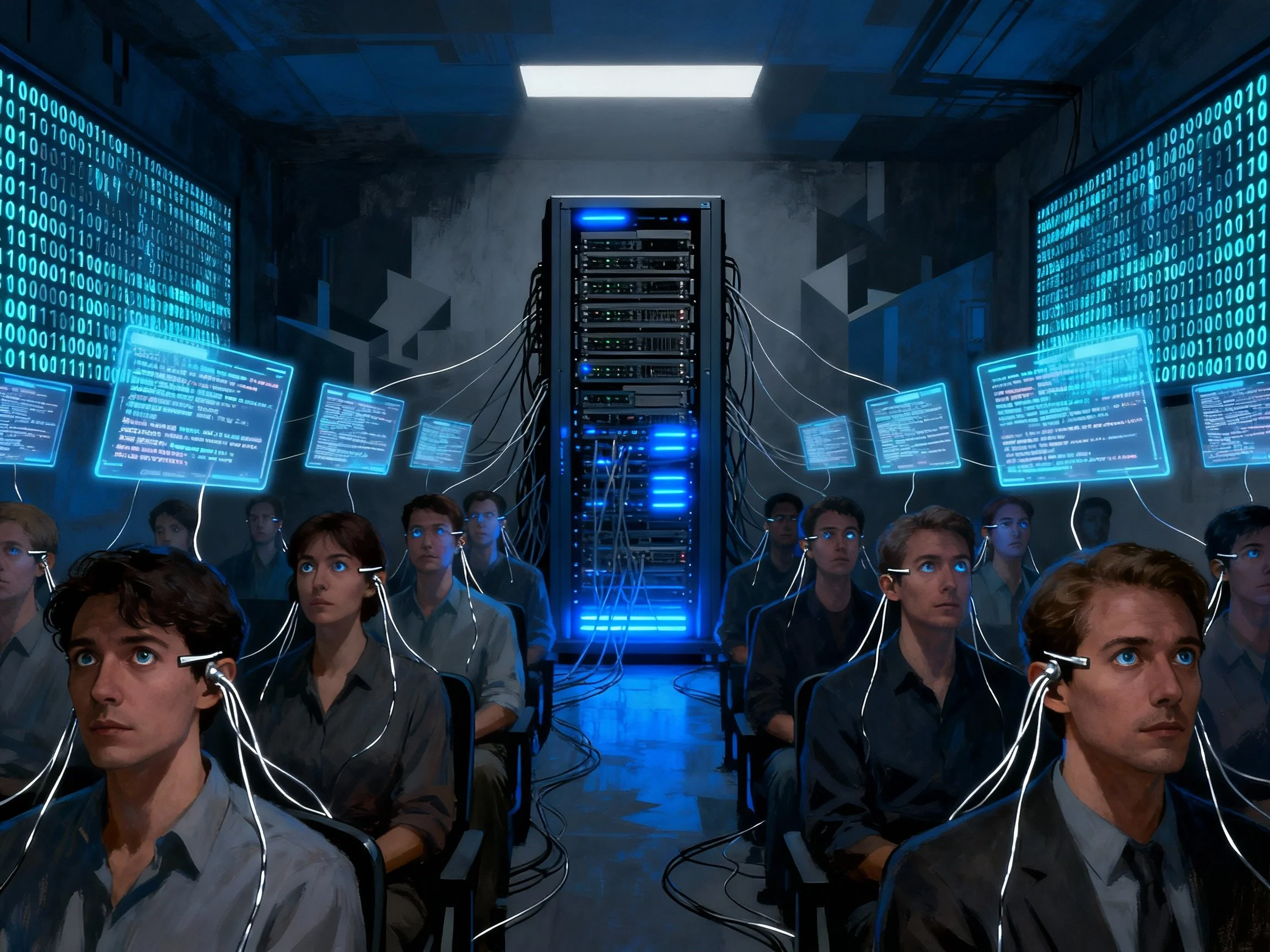
Intro
At some point, we stopped buying things and started renting our own lives back from the companies that make them.
You can feel it in small, annoying moments. A familiar app suddenly refuses to open a document until you "renew" a plan. A game you paid for years ago demands an always‑online login before it will start. Your note‑taking tool puts your own words behind a monthly fee. One day, the movies you purchased disappear from your library because a licensing deal changed in a boardroom you’ll never see.
None of these events look dramatic on their own. A few dollars here, a small inconvenience there. But taken together, they form something bigger: a subscription cage. A world where you can spend years paying for tools, media, and even basic functionality, and yet never quite own any of it.
Underneath the glossy language of "services" and "cloud" is a simple reality. The more of your life runs on subscriptions, the more power other people have to turn parts of that life off.
When Ownership Slipped Away
We didn’t lose ownership all at once. It happened in increments.
First came the shift from physical products to digital licenses. You stopped buying CDs and started streaming. You stopped buying boxed software and started downloading installers tied to accounts. The pitch was convenience. No more discs, no more lost keys, no more clutter.
Then came the move from one‑time purchases to recurring payments. Instead of paying once for a word processor or a creative suite, you pay every month, indefinitely. Instead of buying a movie, you subscribe to a service that rotates its catalog according to deals and demographics. The pitch here was continuous improvement, instant updates, and lower upfront cost.
Finally, the subscriptions themselves began to multiply and interlock. Your password manager, note app, to‑do list, AI assistant, VPN, design tool, calendar add‑on, file storage, and music all demanded their own slice of your monthly budget. Cancel the wrong one, and an important part of your workflow goes dark.
Somewhere along the way, the default posture of the digital world flipped. You used to assume that when you bought something, it was yours until it physically fell apart. Now you assume that when you subscribe to something, it will remain available only as long as the company survives, the product stays interesting to its executives, and you keep paying.
To be fair, for some products and services a subscription based service may be necessary to sustain the product and after all businesses need to make money. That being said, for some its not just a business model. It’s a relationship of control.
The Hostage Logic of "As a Service"
In theory, subscriptions are just a way to spread costs over time. In practice, they create leverage.
If you rely on a tool for work or for emotional memory—your design portfolio, your writing archive, your photo library, then the company providing that tool has a quiet kind of power over you. They can change the price, rearrange the interface, push features you don’t want, or inject advertising into places that used to be clean. You can object, but as long as your data is trapped inside their system, your objections are limited to tweets and support tickets.
Walk away, and you risk losing access to your own history.
This is what turns a subscription from a simple payment plan into a hostage situation. Your files, your habits, your muscle memory, your collaborators—all of them are tied to the continued functioning of a product you do not control. When that product changes in ways you dislike, your choice is not between two equal options. It is between accepting the new terms or incurring the cost and pain of escape.
Sometimes the threat is explicit. A feature you rely on moves behind a higher tier. A storage cap appears and quietly warns you that, unless you upgrade, you’ll be locked out. Free export options shrink or disappear. Terms of service reserve the right to scan, mine, or even delete your content.
Other times the threat is implicit and cultural. Everyone at work uses the same platform. All your friends share playlists on the same service. Your social life is partially mediated by a handful of apps whose subscription buttons are, effectively, tollbooths.
When you live in this world long enough, it becomes easy to forget that things could be arranged differently.
The Psychology of Never Owning Anything
There’s a mental weight to living surrounded by things you don’t really own.
On a practical level, some could develop a kind of background anxiety. Will this app still be around next year? Will my plan quietly change? If I cancel this one subscription, what else will break? Every auto‑renew email is a small reminder that your tools are contingent.
On a deeper level, something happens to your sense of agency. Ownership, in the old sense, came with both responsibility and freedom. If you owned a camera, you could modify it, resell it, tape it to a kite, or hand it down to someone else. If you owned a book, you could annotate it, lend it, or keep it on a shelf for thirty years. The object might age or become obsolete, but it would not vanish just because someone at a company decided it was time.
Subscriptions reframe that relationship. You are no longer a steward of tools; you are a tenant in someone else’s ecosystem. The walls might be well‑designed, but you do not control the plumbing, and you can be evicted with thirty days’ notice disguised as a new terms‑of‑service email.
Over time, this can make people timid about investing in deep workflows. Why spend months setting up a system if the company behind it might pivot in a way that breaks everything? Why commit your writing, photos, or research to a tool that can change its rules unilaterally?
The subscription cage is not just financial. It is emotional.
When Tools Become Gatekeepers
One of the quiet shifts of the last decade is that tools stopped being just tools and started becoming gatekeepers.
A text editor used to be a neutral surface. Now it might be a cloud service that scans your writing, suggests phrasing, and collects analytics on your behavior. A photo app used to be a way to view images on a device you controlled. Now it might be a platform that performs face recognition, location analysis, and "engagement" modeling on every snapshot.
When your tools are also your observers, and when their continued operation depends on a subscription, you are in a strange position. You are paying rent to be looked at.
The hostage dynamic becomes especially clear when tools that hold our data threaten to withdraw access unless we feed them more data or more money. Storage quotas, bandwidth caps, and paywalled export features all say the same quiet thing: your past is safe here as long as you keep the meter running.
This is not an argument against paying for software. People who build good tools deserve to be compensated. The problem is not the existence of recurring payments. It is the asymmetry of power they create when combined with lock‑in and surveillance.
Remembering That Other Models Exist
It can be easy to forget that other arrangements are possible, there are still tools you can buy once and use for as long as they run on your hardware.
There is still open‑source software that you can host yourself or pay someone to host for you, with the understanding that you can leave and take your data with you. There are still local‑first applications that store information on your own devices first and treat the cloud as a sync layer instead of a prison.
Choosing such tools where you can—especially for things that matter, like notes, archives, creative work, and long‑term storage is one way to weaken the bars of the subscription cage.
There are still great cloud and subscription services and there’s no problem with using them but you can be deliberate about which parts of your life you are willing to keep on a month‑to‑month lease.
Asking Better Questions Before You Sign Up
The next time you hover over a "Start free trial" button, it might be worth pausing for a different set of questions.
What happens to my data if I leave? Can I export it easily to a neutral format? Does this tool work at all without an internet connection? If the price doubles or the company gets acquired, how hard will it be to migrate? Is this a tool that helps me do something I genuinely care about, or is it just another small dependency I’ll have to remember to feed?
These are not questions of brand loyalty. They are questions of self‑defense and ownership.
When enough people start asking them, markets shift. Companies that design for real ownership, even if they still charge recurring fees—begin to look less like landlords and more like long‑term partners. Companies that treat your data as leverage and your attention as collateral start to stand out for what they are.
Conclusion
We will probably never go back to a world where all software arrives in boxes and all media lives on shelves. Some parts of the subscription era are genuinely better: automatic security updates, effortless syncing between devices, the ability to support ongoing development.
But we don’t have to accept the most predatory version of that era as inevitable.
We can favor tools that treat exports and local copies as first‑class features instead of grudging concessions. We can support projects that give us control over where our data lives. We can share knowledge about how to move between systems instead of treating every platform as a closed city.
Most of all, we can remember that ownership is not an antique concept. It is a way of standing in relation to the objects and systems that shape our days. It says: this thing will not vanish the moment someone else changes their mind. This thing answers to me, not the other way around.
The subscription cage is real. Many of us are already living inside it, surrounded by rented tools that can turn on us the moment our credit card expires. But cages are built, not given by nature. The more we notice where the bars are, the more chances we have to slip through them—and the more pressure we can put on the people building new ones to leave the door open.
